We empower and scale up youth-led entrepreneurship in the agriculture sector for sustainable national development.
We empower and scale up youth-led entrepreneurship in the agriculture sector for sustainable national development.

Established by H.E the First Lady Mrs. Jeannette Kagame in 2001, Imbuto Foundation has been implementing a holistic approach to uplift the most vulnerable communities through education, health, and empowerment programmes for women and youth.
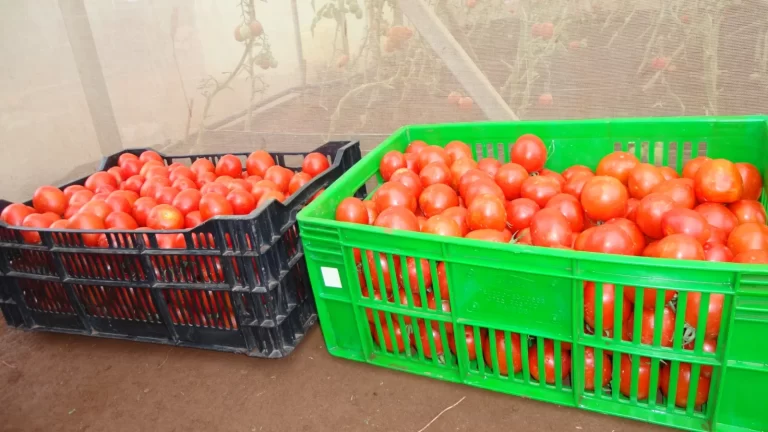
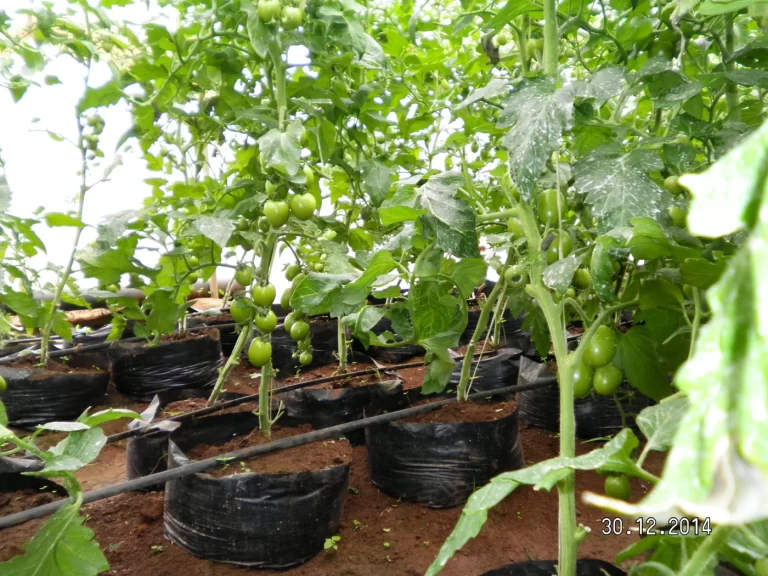
Over the past years, the Imbuto Foundation has supported 2081 Youth and women in agriculture with the goal of improving the living standards of disadvantaged groups, particularly youth and female-headed households, by training them in income-generating activities, particularly tomato intensification and marketing.
Established in 2001 by Her Excellency the First Lady of the Republic of Rwanda, Mrs. Jeannette Kagame, Imbuto Foundation began as Protection and Care of Families against HIV/AIDS (PACFA), an initiative under the Office of the First Lady created to mobilize resources in the fight against HIV/AIDS and support families, including women deliberately infected during the 1994 Genocide against the Tutsi.
Over the years, PACFA grew to embrace more programmes and in 2007, it changed its name to Imbuto Foundation to reflect its evolution and new fields of activity, through programmes in health, education, youth and economic empowerment. Literally translated Imbuto means “seed”. A seed well planted, watered, nurtured and given all the necessary support successfully grows into a healthy plant; one that reaches high and stands tall. This vision shapes Imbuto Foundation’s current and future initiatives.
In recent years, Imbuto Foundation has strengthened its contribution to agriculture and agripreneurship by empowering over 3,000 youth and women through initiatives that promote income-generating activities such as tomato intensification and market access. The Agriculture Programme focuses on improving the livelihoods of women and youth by equipping them with the skills and resources needed to thrive as agripreneurs. Through this approach, the Foundation nurtures youth entrepreneurship in agriculture, enabling young leaders to scale their impact, drive economic growth, and contribute to sustainable national development.
Rwanda has a predominantly young population, with 62.5% of citizens under the age of 30. According to the National Institute of Statistics of Rwanda’s Fifth Population and Housing Census (2022), youth aged 16–30 make up approximately 27.1% of the total population. The 2024 Labour Force Survey shows that 12.9% of youth are unemployed, while 28.4% are neither in employment, education, nor training (NEET). Although 55.2% of youth are engaged in market-oriented agriculture, most operate on a small scale with limited productivity and income.


Through Phases I and II, Imali Agribusiness Challenge demonstrated that targeted financial support, combined with capacity building, can unlock the potential of youth-led agribusinesses, improving productivity and creating employment opportunities for young people.
Building on these results, Phase III will further address youth unemployment and underemployment by supporting scalable, youth-led agribusiness initiatives. In alignment with the International Year of Women Farmers, the programme will place a strong emphasis on gender inclusion by promoting enterprises that actively engage, train, and economically empower women farmers, contributing to both national priorities and global commitments to strengthening women’s role in agrifood systems.
Imbuto Foundation will continue to scale Imali initiative by working closely with government institutions, development partners, financial institutions, and youth organizations.
Imali agribusiness challenge approach entails identifying and rewarding the most innovative and impactful youth-led agricultural projects through a competitive national process. Selected entrepreneurs will receive seed funding and structured mentorship to support business expansion, improve productivity, and strengthen market integration.
Ten most outstanding projects will each receive seed funding of RWF 10,000,000 alongside structured technical support and mentorship.
10 Million each
25 Million
15 Million
10 Million
5 Million each

Thank you for your interest in Imali Agribusiness Challenge phase 2. Applications closed on 5 April 2025.
Stay tuned for future opportunities.
Thank you for your interest in the Imali Agribusiness Challenge. To make the process easier for you.
Below are some of the key criteria considered in the selection process:
1. The project must operate within the agricultural value chain (not livestock).
2. The project must be at the implementation stage.
3. The applicant must be a youth aged between 18 and 30 years.
4. The project must have a physical location for implementation.
5. The project must demonstrate sustainability and include a clear plan for job creation.
6. The project must have a valid registration certificate from the Rwanda Development Board (RDB) or the Rwanda Cooperative Agency (RCA).
7. The project owner must be available to participate in a six-month mentorship programme.
8. The project must be environmentally friendly.
9. The project must prioritize employment for youth and women, with the ability to provide evidence of this.
10. The project must operational and promote youth engagement and participation in agriculture.
Murakoze gusura urubuga rw’irushanwa rya Imali Agribusiness Challenge.
Bimwe mu bizagenderwaho mu guhitamo imishinga izitabira irushanwa:
1. Kuba ari umushinga uri mu buhinzi bwongera umusaru (atari ubworozi),
2. Kuba ari umushinga usanzwe ukorwa atari igitekerezo kandi ufite ibikorwa bifatika,
3. Nyir’ umushinga agomba kuba ari mu cyiciro cy’urubyiruko (Hagati y’imyaka 18 na 30),
4. Kuba umushinga ufite aho ukorera hazwi,
5. Umushinga ugomba kugaragaza ko uzakomeza kwaguka kandi uzatanga akazi ku bantu benshi mu gihe kiri imbere,
6. Umushinga ugomba kuba ufite icyemezo cy’uko wanditswe muri Rwanda Development Board (RDB) cyangwa Rwanda Cooperative Agency (RCA),
7. Kuba nyirumushinga azabasha kuboneka mu mahugurwa (Mentorship) mugihe kingana n’amezi 6,
8. Kuba ari umushinga wita ku bidukikije,
9. Kuba ari umushinga uha akazi urubyiruko n’abagore by’umwihariko kandi witeguye kubyerekana,
10. Kuba ari umushinga usanzwe ukora kandi ukaba ukangurira urubyiruko kwitabira ubuhinzi.